ATTENTION: If shoulder pain that pills, injections, and therapy never fixed is keeping you up at night — an orthopedic surgeon explains what he now tells his own family to try instead. Read this before your next appointment.
Orthopedic Surgeon: "I No Longer Recommend Surgery For Most Chronic Shoulder Pain — Here's What I Tell My Own Family To Do Instead"
After 23 years and more than 2,800 shoulder operations, a respected surgeon explains the simple 12-minute method that made him question almost everything his industry sells.
The hidden driver of chronic shoulder pain: a joint starved of blood flow.
Dear Friend,
If your shoulder aches when you reach for a coffee cup… if you've quietly given up sleeping on your favorite side… if you've started using your "good arm" for everything without even noticing…
Then what I'm about to tell you may be the most important thing you read this year.
Because in the next few minutes, I'm going to show you:
- Why most chronic shoulder pain never gets fixed — even after injections, pills, and months of physical therapy…
- The overlooked root cause that Japanese researchers identified decades ago (and why almost nobody in American medicine talks about it)…
- And the simple 12-minute method I now recommend to my own family — before anyone even mentions the word "surgery."
But first, I need to get something off my chest.
The Quiet Problem In My Own Profession
Pain management is a huge industry — shoulder surgeries, cortisone injections, prescription anti-inflammatories, endless courses of therapy. And in my own years in orthopedics, the thing that quietly bothered me most was how many people cycled through all of it and still never found lasting relief.
Not because the doctors are bad people. I worked alongside brilliant, caring surgeons for two decades.
But because the system is built to manage your pain — not to resolve what's actually driving it.
My name is Dr. Alan Reyes. I spent more than two decades in orthopedics. I've stood at the operating table for more shoulder procedures than I can count, and I've taught younger surgeons how to do the same.
And I'm telling you, as plainly as I can: if I could go back, I would have told hundreds of my own patients to try what I'm about to show you first.
What changed me wasn't a study. It was one terrible night in my own home.
The Night Everything Changed

"I found my wife on the edge of the bathtub at 2:40 in the morning, holding her shoulder and crying."
My wife Susan has been an ICU nurse for 19 years. She's the toughest person I know. She's held dying patients' hands through twelve-hour shifts and never once complained.
Two years ago, her right shoulder started to go. Years of lifting patients, pulling beds, reaching overhead — it adds up.
One night I woke at 2:40 AM and she wasn't in bed. I found her sitting on the edge of the bathtub in the dark, gripping her shoulder, crying as quietly as she could so she wouldn't wake me.
She looked up at me and said five words I will never forget:
"Alan… you fix shoulders. Fix mine."
And I froze. Because here's the truth nobody in my position wants to admit:
I knew exactly what the system would offer her — and I knew it probably wouldn't work.
We Tried Everything The "Experts" Recommend
Over the next eight months, my wife became a case study in everything modern medicine throws at a painful shoulder:
Cortisone injections. Two of them. Each one bought her about three weeks of relief before the ache crept back — a little deeper each time.
Physical therapy. Twice a week, $85 a session after insurance. She did every exercise religiously. Some weeks it helped a little. It never lasted.
Anti-inflammatories. Until her stomach couldn't take them anymore.
Massage, creams, TENS pads, a $400 "ergonomic" pillow. Drawer full of disappointments.
Meanwhile she was sleeping in the recliner because lying flat made it worse. She started dreading the night shift she used to love.
And the next stop on the conveyor belt — the one I'd personally sent hundreds of patients to — was surgery.
That's when I did something I should have done twenty years earlier.
I stopped acting like a surgeon… and started acting like a scientist.
The Discovery Buried In The Research
Three weeks of late nights in the research literature changed how I see shoulder pain forever.
For three weeks, after Susan went to work, I sat at my desk until 2 AM digging through orthopedic journals, rehabilitation studies, circulation research — anything I could find.
And buried in decades-old research, I found something that stopped me cold.
Japanese researchers studying failed shoulder treatments in the late 1980s found that the great majority of stubborn, treatment-resistant shoulders shared one common factor — and it wasn't torn tissue, bone spurs, or "old age."
It was severely restricted blood flow in and around the shoulder joint.
Here's why that matters more than almost anything else.
The Real Reason Your Shoulder Still Hurts
Your shoulder is the most mobile joint in your body — and one of the worst supplied with blood. The rotator cuff tissues live in what researchers literally call a "critical zone" of poor circulation.
Think of your shoulder like a door hinge.
When a hinge gets stiff and squeaky, you don't sand it down. You don't unscrew it and bolt on a new one. You oil it.
A stiff hinge doesn't need replacing. It needs oil. Your shoulder works the same way.
Blood is your body's oil. It carries oxygen and nutrients in, and it carries inflammatory waste out. When circulation to the shoulder collapses, the tissues sit there — starved, stiff, and marinating in the very inflammation that causes your pain.
Now look at what the standard treatments actually do:
Pills? They mute the alarm. They don't feed the tissue.
Injections? Cortisone can actually reduce local circulation over repeated use.
Surgery? You're cutting tissue that's already starving — which is one reason recovery so often disappoints.
The pain isn't the problem. The pain is the smoke alarm. Restricted blood flow is the fire.
So the real question became: how do you restore circulation to a joint that barely gets any — without drugs, without needles, without a scalpel?
The 12-Minute Method — And Why The Timing Matters
The research pointed to three things — and here's the part that almost everyone gets wrong: they only produce the full effect when they happen at the same time.
1. HEAT — deep, steady warmth opens blood vessels and draws fresh circulation into that starved "critical zone." Not a hot-water bottle that goes cold in ten minutes. Controlled, consistent heat.
2. COMPRESSION — firm, snug support around the joint that holds the warmth against the tissue, stabilizes the shoulder, and keeps the therapy exactly where it's needed.
3. MASSAGE — deep rhythmic vibration that works like a pump, encouraging fresh, oxygen-rich blood through the tissues while easing the tension that's locking everything down.
Heat alone helps a little. Massage alone helps a little. You've probably tried both and shrugged.
But together, simultaneously, for about 12 minutes — they create a window where the shoulder finally gets what it's been begging for: flow.
The difference 12 minutes a day can make — once the shoulder finally gets flow.
When I understood this, I had one problem: nothing in my hospital delivered all three at once. The heat packs were separate. The massage tools were separate. Compression sleeves did nothing else.
So I went looking for a device that could.
I Tested It On The Person I Love Most
What I eventually found — and helped refine with direct feedback from Susan and, later, dozens of others — is a wearable shoulder device that delivers all three therapies in one 12-minute session.
The first night Susan wore it, she fell asleep on the couch during the session. She hadn't relaxed that deeply in months.
By the end of the first week, she told me the morning stiffness was noticeably softer.
By week three, I caught her reaching up to the top cabinet shelf — with her right arm — without thinking about it. She stopped, looked at her own hand, and burst into tears.
She sleeps in our bed again. On her side. The recliner is just a recliner now.
Heat, compression, and massage — working on the shoulder at the same time.
After Susan's turnaround, I lent a unit to my neighbor Dale — 58, a construction foreman whose left shoulder was so bad he'd started buttoning his shirts one-handed. He's the most skeptical man I've ever met. He called it "another gadget."
About two weeks later he handed it back almost reluctantly and asked where he could get his own. That morning, he told me, he'd buttoned his work shirt with both hands for the first time in months. His exact words: "I still think it's a gadget. But it's the first gadget that did anything. Should've tried it years ago."
Dale — reaching for things he'd stopped reaching for.
That's when I realized this couldn't stay a private recommendation between me, my wife, and the guy across the street.
The Device I Now Keep In My Own Home
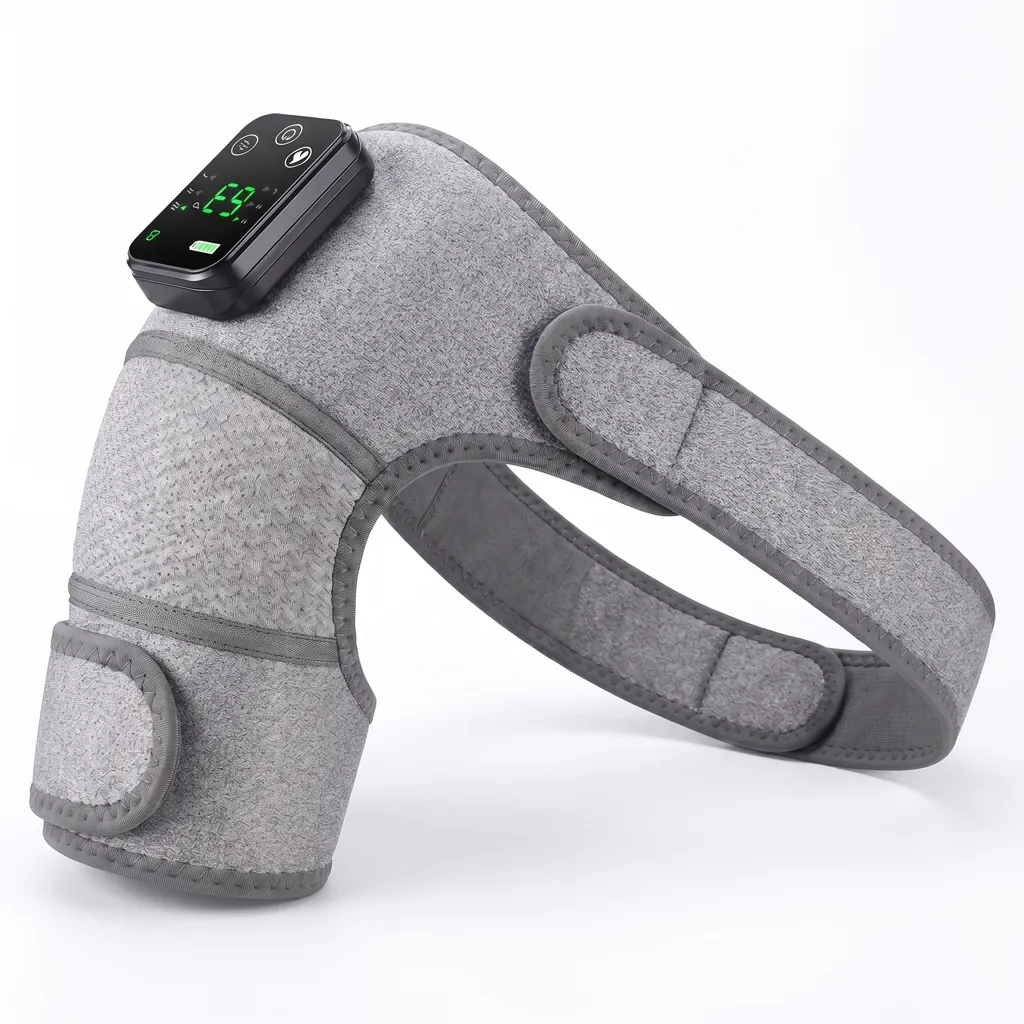
TriRelief™ — heat, compression, and massage in one wearable device.
The one Susan wears — the same unit I lent to Dale and got back — is called TriRelief. And I want to tell you about it the way I'd tell a patient sitting across from me in my office — not the way a box tells you.
It does the one thing nothing in my hospital could: it runs all three therapies at the same time — the steady heat, the snug compression, the deep rhythmic massage — in a single 12-minute session. That simultaneity isn't a feature on a list. It's the entire reason it works when the heat pad and the massage gun on their own never did.
The rest of it is mercifully simple, which matters more than people admit. It's completely wireless — no cord, no outlet to sit next to — so Susan wears it on the couch while the news is on. It fits either shoulder on an adjustable cross-body strap, so a household with two bad shoulders only needs one. And you set the warmth and the massage right on the device with your fingertips. No app. No remote. No manual you'll lose in the drawer.
That's honestly the whole thing. You strap it on, you choose how warm and how deep you want it, and for the next twelve minutes you don't do anything at all.
Here's what those twelve minutes actually feel like, in Susan's words and Dale's and now plenty of others': the first couple of minutes are just warmth — a spreading heat that, more than one person has told me, feels like the shoulder "exhaling" for the first time in years. Somewhere in the middle the massage gets to work underneath the warmth, a deep, pumping rhythm that you feel reaching the ache rather than skating over it. And by the last few minutes most people have gone quiet. The shoulder feels looser, lighter, warmer. A good number of them, like Susan that first night, are simply asleep.
Once or twice a day. That's the entire protocol. No appointment, no co-pay, no waiting room.
The Results, Honestly
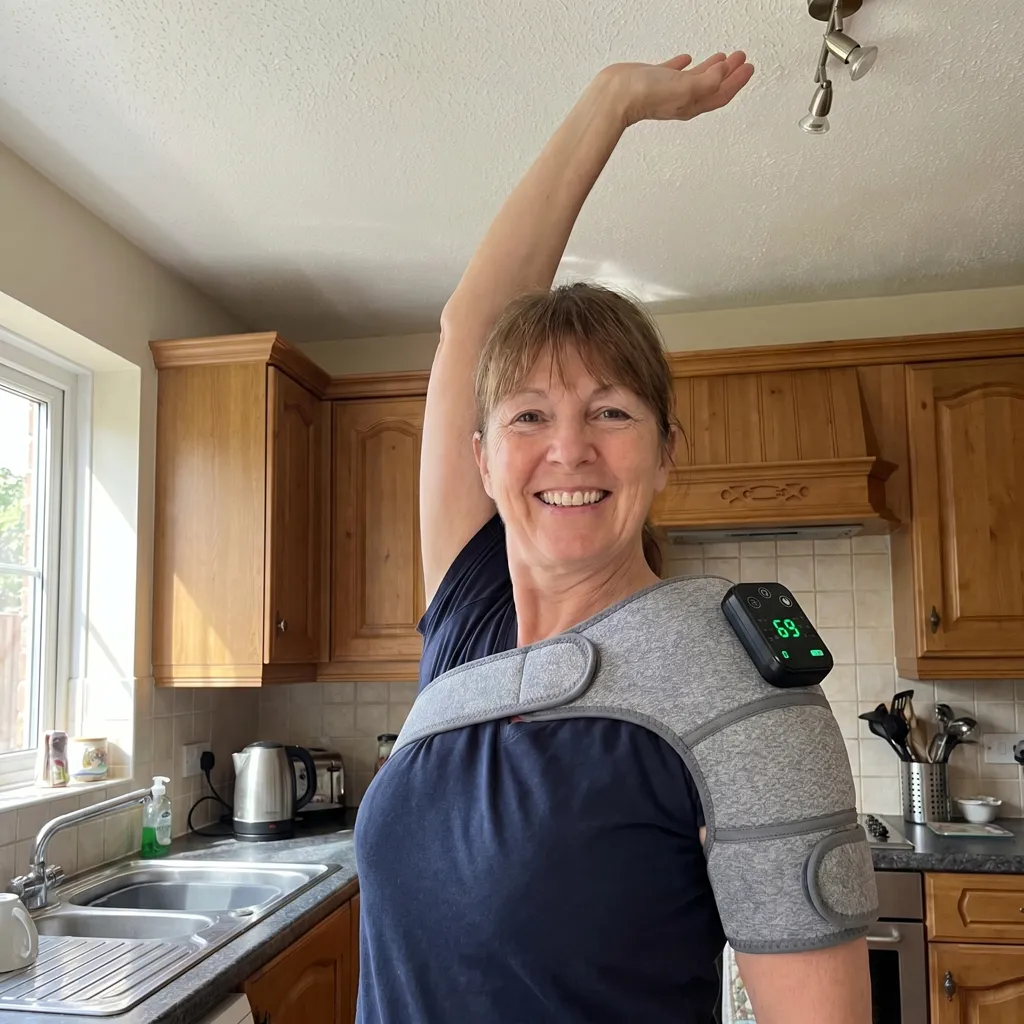
The moment that matters: reaching overhead again without bracing for it.
I want to be careful here, because I've spent my career being skeptical of tidy numbers. So I'll tell you plainly: TriRelief has now been worn by thousands of people, and when we've asked them how they're doing, the overwhelming majority tell us their shoulder feels meaningfully better within the first few weeks — most often the things they mention first are sleeping through the night and reaching overhead without that flinch. Not everyone. But most. And the people it helps tend to tell us in the same surprised tone Susan had on the couch.
Here are a few of them, in their own words.
"I'd stopped hanging laundry on the line because I couldn't lift my arm that high. Three weeks with this thing and I caught myself doing it without a second thought. I sat down and cried in the yard."
— Carol M., Toledo, Ohio
"35 years as an electrician wrecked both my shoulders. I use it on each side while I watch the news. First thing that's touched the deep ache — and believe me, I've bought every gimmick there is."
— Ray D., Spokane, Washington
"My husband bought it for me after my second round of injections wore off. I was furious he spent the money. I owe him an apology — I haven't slept this well in four years."
— Janet R., Tampa, Florida
"It's the little things — waving, reaching, sleeping — that come back first."
What Does Lasting Relief Actually Cost?
Let's be honest about the alternatives:
- Average shoulder surgery (with insurance, all-in): $9,600+ — plus months of recovery
- A year of twice-weekly physical therapy: $5,350+
- Full surgical path without insurance: $25,000–$50,000
- Even the injections run $300–$900 each — and they wear off
Against that, the regular price of TriRelief — $249.99 — is a small fraction of even the cheapest line on that list, and it's fair for what it stands in for.
But that's not what you'll pay today. Because they're still in their launch, the price right now is discounted hard:
Why so low? Their reasoning is simple, and I think it's sound: they don't run TV ads and they don't pay distributor markups. They ship direct, and they're betting that if they get TriRelief onto enough shoulders at a price anyone can manage, word-of-mouth will do what a giant ad budget can't. Having watched my own skeptical neighbor come around, I'd say it's a smart bet.
Get TriRelief — 76% Off Today90-Day Money-Back Guarantee · Fast US Shipping
Your 90-Day "Use It Or Lose Nothing" Guarantee
Here's the part that removes every last excuse.
Order TriRelief today and use it — actually use it, daily, on your worst shoulder — for up to 90 days.
If you don't feel a genuine difference in how your shoulder feels, moves, and sleeps… email the support team and you get every penny back. No forms. No "restocking fees." No interrogation.
The company can stand behind a promise like that because, frankly, almost nobody sends it back. The twelve minutes tend to make the argument better than I can.
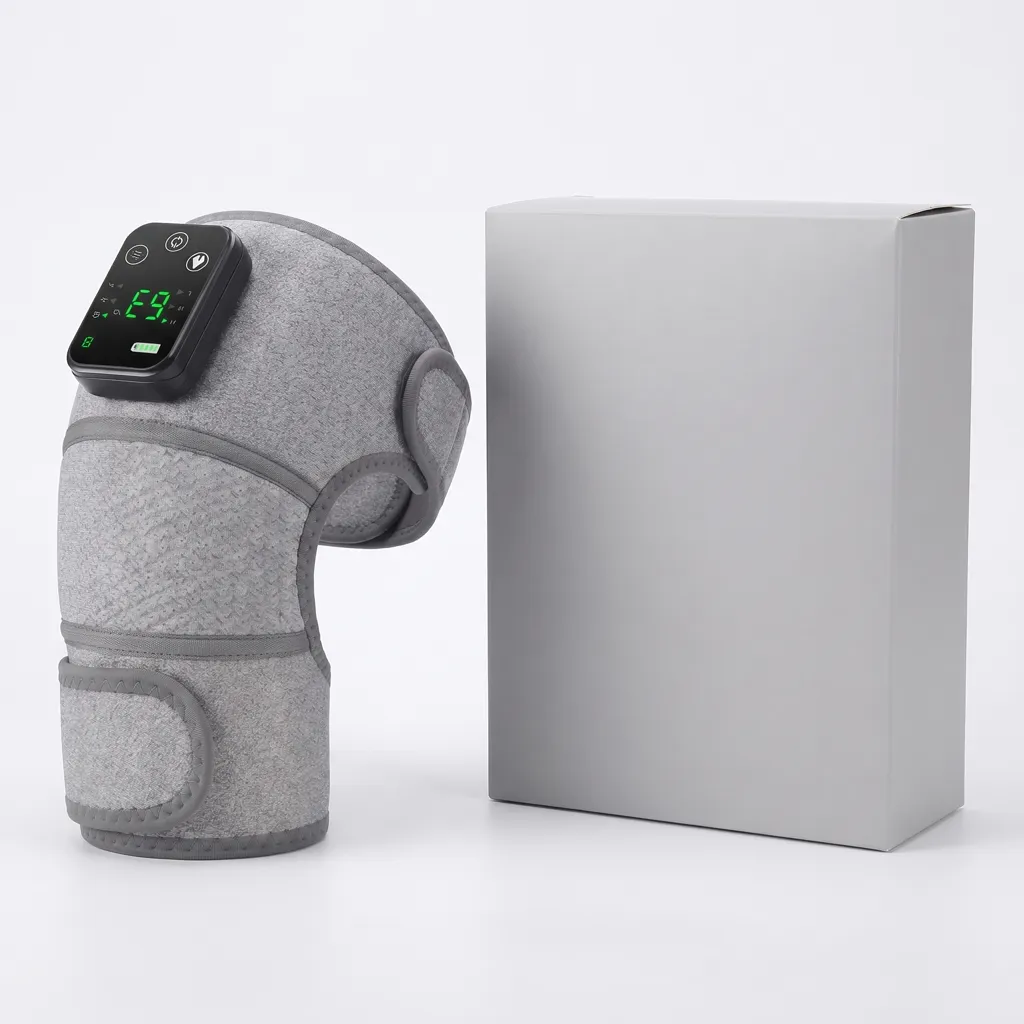 Get Mine With The 90-Day Guarantee
You risk nothing. Your shoulder risks staying exactly as it is.
One Honest Word About The Price
I'll be straight with you, because I'd rather you trust me than rush you.
The launch price is tied to this first production run — the batch size was set before we started, and when those units are gone the price settles back toward what it actually costs to make and ship. There's no countdown on this page because I won't pretend to know your exact place in line; I only know the batch is moving. If $59.99 fits today, this is the easiest the decision will ever be.
See Today's Launch Price →76% off while the first run lasts · 90-day guarantee
You Have Two Paths In Front Of You
You've already worked hard at this — the therapy, the injections, the gadgets in the drawer. None of that was your fault, and I'm not going to pretend TriRelief is the only answer for every shoulder — it isn't. But here's the honest choice in front of you.
Path #1: Close this page and keep doing what you're doing. Maybe it slowly improves. Maybe, six months from now, your shoulder is about where it is today.
Path #2: For less than the cost of a single PT session, give your shoulder the heat, compression, and massage it's been missing — 12 minutes a day — and find out for yourself. With 90 days to send it back if it doesn't earn its place.
One of these paths costs you almost nothing to try, and gives every penny back if it doesn't help.
Check Availability Now →76% launch discount · 90-day guarantee · Fast US shipping
What To Do Next (It Takes 2 Minutes)
- Tap any button on this page to see today's launch price and availability.
- Choose your package — most people start with one; there's a bundle on the next page if you want a second for the other shoulder, or for someone you love.
- Complete the secure checkout. It takes about 60 seconds.
- Your TriRelief ships fast with simple instructions.
- Charge it, strap it on, pick your settings. Your first 12-minute session starts tonight.
- In three weeks, write to the SootheThera team — they're the company that makes TriRelief — at support@soothethera.com and tell them what changed. They read every single one.
90-Day Money-Back Guarantee
TriRelief ships direct from its maker, SootheThera, so you won't find it in stores or on Amazon — only here. That's also how the launch price stays this low.
Get TriRelief — 76% Off Today →To your recovery,

Dr. Alan Reyes, MD
Orthopedic Surgeon · Husband of one very relieved ICU nurse
P.S. — You're not deciding today whether TriRelief works. You're deciding whether to find out — with 90 full days of protection and every penny refundable. The only way to lose is to keep doing what you're already doing.
P.P.S. — Picture yourself three weeks from now: reaching the top shelf, sleeping on your favorite side, lifting a grandchild without that flash of fear. That version of you starts with one tap.
Check Availability Now →76% off · 90-day guarantee · While launch units last